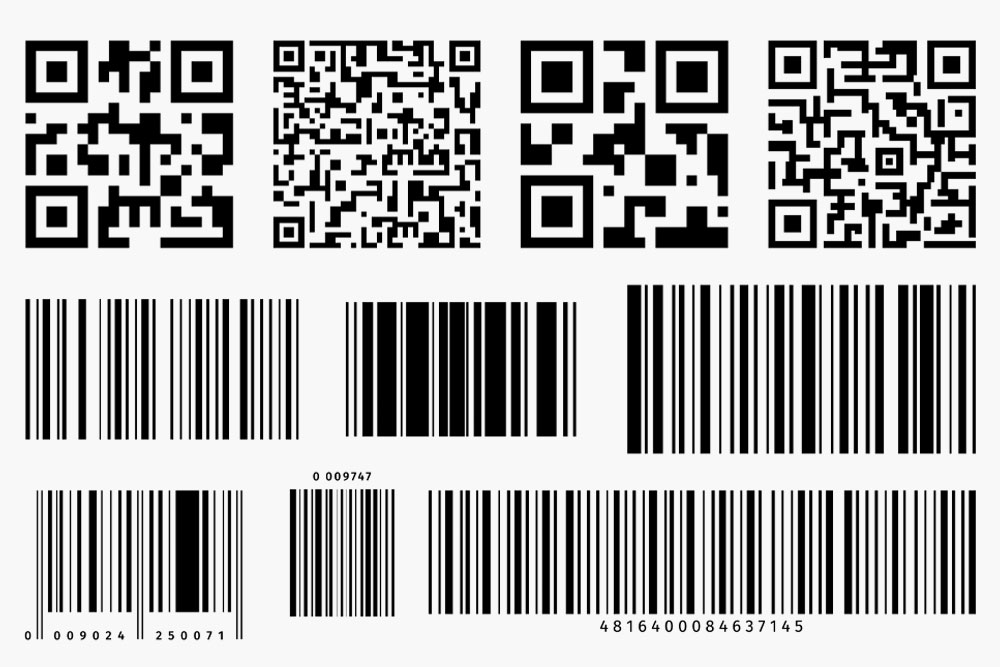
Understanding the different types of barcode labels is essential for businesses that rely on accurate data capture and efficient inventory management. With a variety of barcode formats available, selecting the right one for your application can optimize your workflow and enhance overall productivity. In this guide, we break down the most common barcode types used in label printing and discuss their unique features and applications.
- Linear Barcodes
Linear barcodes, also known as one-dimensional (1D) barcodes, are the most traditional format. They consist of a series of parallel lines and spaces, where the width and spacing of the bars represent data. Common linear barcode types include:
- Code 39: Widely used in manufacturing and defense, Code 39 supports alphanumeric characters and is favored for its simplicity and ease of use.
- Code 128: Known for its high density, Code 128 can encode the entire ASCII 128-character set. It is a popular choice in shipping and packaging due to its compact size and versatility.
- UPC & EAN: Universal Product Code (UPC) and European Article Number (EAN) barcodes are standards in retail environments. They are primarily used for scanning at the point of sale and inventory tracking.
- Two-Dimensional (2D) Barcodes
2D barcodes store data both horizontally and vertically, allowing them to encode more information in a smaller space. They are increasingly popular in a range of industries for their efficiency and robustness.
- QR Codes: Perhaps the most recognizable 2D barcode, QR codes can hold a large amount of data, including URLs, text, and other information. They are widely used in marketing, logistics, and mobile payments.
- Data Matrix: Known for its ability to be read even when partially damaged, Data Matrix codes are commonly found on small items and in manufacturing environments where space is limited.
- PDF417: This stacked linear barcode is capable of encoding large amounts of data and is frequently used in applications such as transport, identification cards, and inventory management.
- Specialized Barcode Formats
Depending on your industry, specialized barcode types might offer the best performance and data capacity for your unique needs.
- Aztec Code: Often used in transportation tickets and mobile boarding passes, the Aztec code is designed for quick scanning and works well even on damaged surfaces.
- MaxiCode: Employed by shipping companies, MaxiCode is a 2D barcode that facilitates quick scanning during package sorting and delivery processes.
Choosing the Right Barcode Type
The selection of a barcode type depends on several factors including:
- Data Requirements: Determine the amount of data that needs to be encoded. If you require more data, 2D barcodes like QR codes or Data Matrix might be best.
- Space Constraints: For smaller labels, a high-density barcode such as Code 128 or Data Matrix can be advantageous.
- Scanning Environment: Consider the scanning technology available and the conditions under which the barcodes will be used. Some environments may benefit from barcodes that are more tolerant of damage or poor print quality.
Optimizing Your Labeling Solutions
For businesses looking to optimize their labeling solutions, understanding these barcode types is a crucial step. To explore a wide range of high-quality barcode labels, please visit Creative Safety Supply’s Barcode Labels. Their selection of barcode labels is designed to meet the demands of various industries, ensuring reliable, efficient, and durable labeling for your business needs.
By selecting the appropriate barcode type, you can improve scanning accuracy, enhance inventory management, and ensure seamless integration into your overall business operations. Whether you are in retail, manufacturing, logistics, or any industry in between, a well-chosen barcode can make all the difference.
Additional Resources
- A Complete Guide to QR Codes– creativesafetysupply.com
- Barcode Maker - Online Generator Tool for Easy Barcode Generation– label-printers.org
- A comprehensive guide to barcode types: Understanding their uses and characteristics– blog.labeltac.com
- Boost Productivity with Barcodes: A Guide to Organizing Your Workplace– iecieeechallenge.org
- The Barcode Labeling System– industrialbarcodelabels.com
- Item Barcodes 101: What Are They and How Do They Work?– realsafety.org
- How Barcodes Revolutionized Inventory Management– lean-news.com
- Barcode Inventory Management 101: A Guide to Efficient Tracking Solutions– kaizen-news.com
- Implementing 5S Barcoding for Efficient Inventory Management Solutions– blog.5stoday.com